资讯
生物技术主流化,可持续从“卖点”变“标配”——CAME国际嘉宾专访实录(五):Andrea Maltagliati,欧洲化妆品原料联合会秘书长
2026年10月14日 15:08
01 开场:他带来欧洲原料市场的“五年之约”
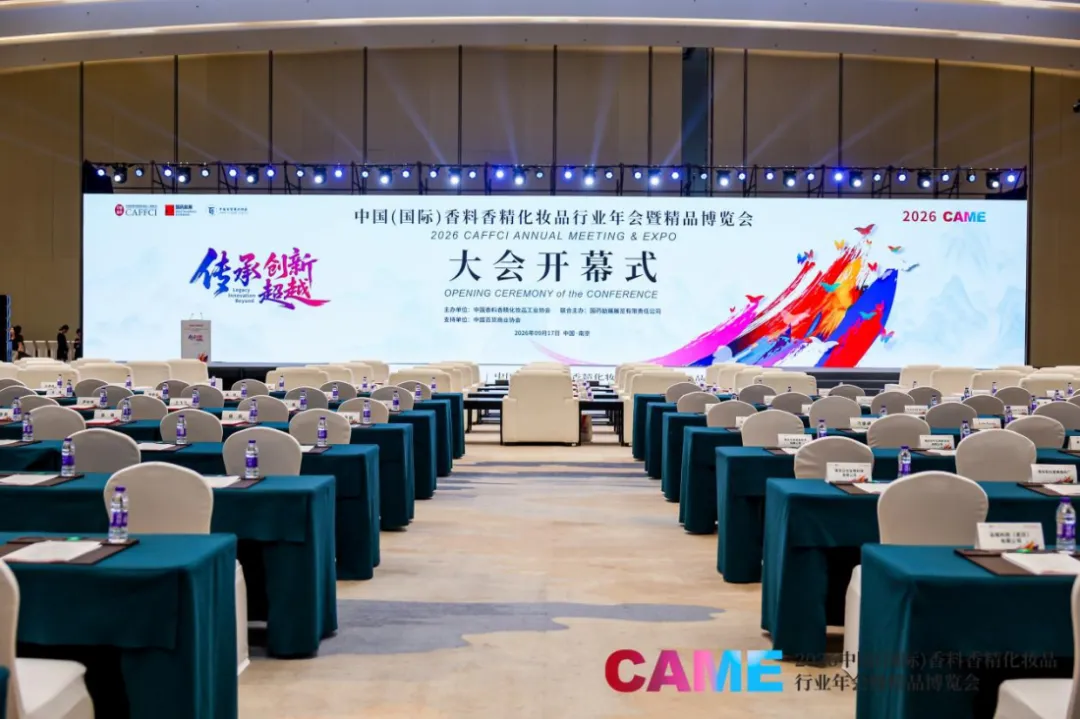
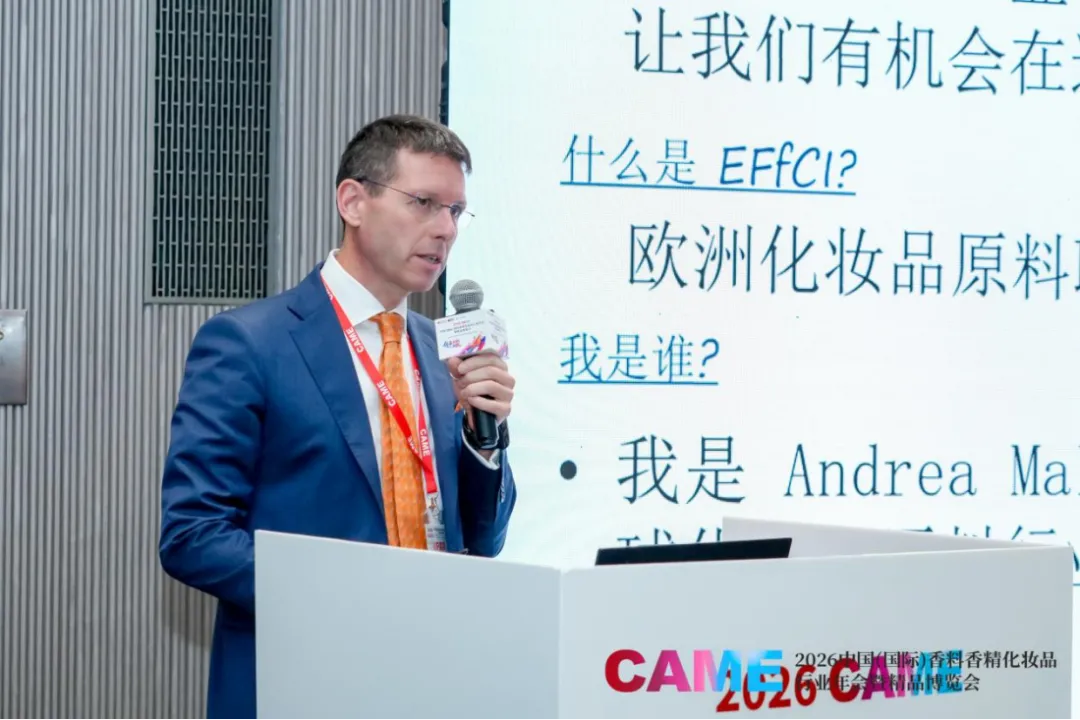
2026年9月17~19日,中国(国际)香料香精化妆品行业年会暨精品博览会(CAME)在南京举行。欧洲化妆品原料联合会(EFfCI)秘书长Andrea Maltagliati受邀参会,并于9月17日上午在2026中国香妆行业信息发布会上带来主题分享《欧洲化妆品原料市场:过去五年分析及未来展望》。CAME期间,他接受中国香妆协会国际事务部专访,围绕营销术语合规、监管驱动的原料替代、生物技术创新与中欧行业合作等议题展开深入对话。
Andrea Maltagliati毕业于米兰大学化学专业,二十多年前进入化妆品行业,在本地、欧盟乃至全球市场积累了丰富经验,熟悉乳化剂、功能性成分、表面活性剂、活性成分等多种原料类型。目前他担任欧洲化妆品原料联合会(EFfCI)秘书长,负责管理与欧盟原料产业需求相关的各项活动,协调10个工作组,维护行业利益,并在全球机构论坛及各利益相关方面前代表行业发声。EFfCI会员覆盖欧盟绝大多数化妆品原料企业,是欧洲化妆品原料行业最重要的行业协会之一。
02 演讲回顾:欧洲化妆品原料市场的现状与未来
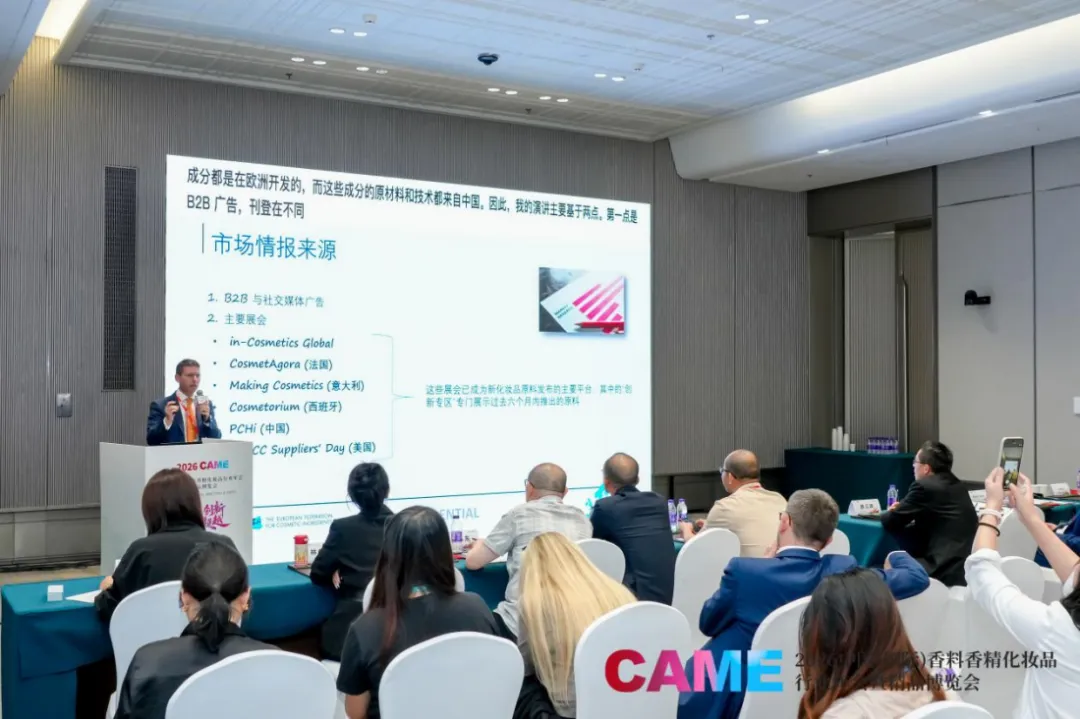
在信息发布会上,Andrea带来一份面向中国原料企业的欧洲市场“体检报告”。以下为演讲干货梳理:
(一)五个关键判断。他指出:欧洲依然是全球最大的化妆品原料市场之一;尽管监管压力日益增大,创新率依然很高;可持续发展已成为一项商业必要条件,而不再仅仅是营销优势;生物技术正在重塑成分开发;原材料供应链正变得日益区域化和多元化。驱动这一切的主要因素,包括欧盟绿色协议(Green Deal)的长期推进、消费者预期变化、监管演变、气候变化、数字化配方,以及人工智能辅助的成分研发。
(二)八大市场趋势。Andrea盘点了过去6至12个月欧洲市场上涌现的主流创新主题:生物技术、升级再造成分、海洋生物技术、发酵、肌肤长寿、神经美容学、皮肤微生物群、蓝色美妆、人工智能辅助的成分研发、多功能成分。其中他重点展开的趋势包括:生物技术已从小众走向主流,成为获取品质稳定、可追溯且可持续活性成分的首选途径(生物技术多肽、精密发酵活性成分、生物技术维生素与神经酰胺等案例密集出现);“升级再造”成为可持续原料新来源(橄榄废料提多酚、咖啡渣制去角质产品、苹果渣做抗氧化剂、葡萄籽产油、柑橘皮提精油等);“肌肤长寿”品类在过去6至12个月得到大力推广(NAD+增强剂、肽、外泌体、植物干细胞、适应原植物);海洋生物技术开拓藻类、微藻、海洋细菌等新原料来源;可持续功能性成分聚焦替代硅油、合成聚合物、微塑料与源自化石的润肤剂。
(三)两个必须澄清的“营销术语”。特别值得注意的是,Andrea专门提醒:“神经美容学”与“多功能”成分这两个概念,在世界各国均无明确的法律定义,目前仅仅属于营销术语——所有以这些概念宣传的化妆品成分,本质上仍是普通化妆品成分,必须符合与其他任何化妆品成分相同的安全及宣称要求。其中“多功能”成分虽然能降低配方复杂性、减少成分数量、降低配方成本,但其同时宣称防腐增效、保湿、改善质地、提升感官体验、抗氧化保护等多重功效,也引发了安全性评估以及成分分类分级的严肃问题。
(四)监管压力正在“重构配方”。Andrea列举了当前欧洲重大的监管压力清单:PFAS限制措施、各国采用的纳米颗粒定义与限值、微塑料限制、绿色声明指令、生态设计原则、可持续发展报告。其结果清晰可见——成分重新配制、替代合成方法、透明度与供应链重组。他还展示了供应链演变链条:气候变化导致农业变异性增加、价格波动,倒逼供应商多元化,进而推动生物技术的应用——企业正日益通过生物技术替代易受供应风险影响的天然原材料。
(五)展望2027—2030。Andrea给出六大可能发展方向:更多生物技术成分、精准发酵、负碳成分、促进生物多样性的采购、循环经济原料、数字护照、有充分证据证实的功效声明、人工智能辅助的成分发现。演讲最后,他用五个关键要点收束全场:生物技术正成为主导性的创新平台;如今可持续性影响着原料开发的每一个阶段;监管压力正迫使相关方在条件允许的情况下调整配方;多功能成分正在取代单一用途的原材料;贸易展会依然是预测未来原料趋势的最佳风向标——而欧洲继续在法规驱动的创新方面保持领先,亚洲则日益推动成分的商业化。
03 一点观察:中国原料企业读到的三件事
第一,“可持续”已从卖点变成门槛。Andrea反复强调一个判断:可持续发展在欧洲已从“营销优势”升级为“商业必要条件”。绿色声明指令、生态设计、可持续发展报告等监管工具接踵而至,意味着原料企业“自我宣称绿色”的窗口正在关闭——能否提供可验证、可追溯、口径一致的可持续数据,将成为进入欧洲及全球供应链的前提条件。对中国原料企业而言,越早建立这一能力,越能避免在门槛到来时被动应对。
第二,生物技术是“工具”而非“万能药”。Andrea在演讲与专访中均强调,生物技术、精密发酵是重要的替代路径,但并非所有分子都能顺利转移到发酵平台,产量、纯化成本、规模化投资仍是现实约束;替代的本质是一次“技术转型”而非“一对一替换”。中国原料企业在布局生物技术时,需要同时评估技术可行性、成本经济性与供应链安全,警惕“实验室可行、工业不可行”的陷阱。
第三,中欧原料对话正在从“信息交换”走向“机制化合作”。Andrea在专访中透露,EFfCI与CAFFCI已在近年建立直接、富有成果的联系,并在PCHi 2026期间进一步明确了构建更结构化合作机制的意向;EFfCI还专门设有China Hub(中国枢纽)对接中国CSAR及监管沟通。对中国原料行业而言,这意味着与欧洲同行的合作将从“偶尔的展会交流”升级为持续的技术对话、标准互通与B2B对接——这是行业国际化进程中值得把握的窗口。
04 CAME专访:五个问题
会后,中国香妆协会国际事务部陈柯如(Jasmine)对Andrea Maltagliati进行了专访。以下为对话实录:

Q1|“神经美容学”“多功能成分”的合规边界在哪里
提问:报告指出“神经美容学”“多功能成分”属于没有法律定义的营销术语,但市场上大量新原料正以此类概念宣传。EFfCI对企业使用这类营销概念,有哪些实操层面的合规建议?如何区分合法宣传与夸大宣称的边界?
Question:The report points out that "neuro-cosmetology" and "multi-functional ingredients" are marketing terms without legal definitions, yet many new raw materials on the market are promoted under these concepts. What practical compliance recommendations does EFfCI offer for companies using such marketing concepts? Where should companies draw the line between legitimate communication and over-claiming?
Andrea Maltagliati:"Neuro-cosmetology" and "multi-functional ingredients" are appearing in the market to describe new ingredient technologies and formulation concepts. However, neither term currently constitutes a legally defined regulatory category. Their use therefore does not create a specific regulatory status or exemption from the applicable cosmetic legislation.
From an association perspective, it is important to distinguish between the scientific or marketing terminology used to describe an ingredient concept and the specific claims made for the finished cosmetic product. The regulatory responsibility for the final communication rests with the company placing the cosmetic product on the market.
In practice, the regulatory assessment will depend on what is actually communicated to consumers. A reference to a "neuro-cosmetic" concept, for example, must not mislead consumers by attributing to the cosmetic product effects that go beyond what is expected for such a product. If the associated communication goes beyond cosmetic effects and suggests pharmacological, therapeutic, or systemic effects, a different regulatory assessment is required.
Similarly, describing an ingredient as "multi-functional" does not, in itself, establish that all of the functions associated with it can automatically be communicated as benefits of the finished cosmetic product. Each specific claim remains subject to the applicable requirements concerning truthfulness, evidential support, honesty and consumer understanding.
The distinction between legitimate communication and over-claiming therefore depends primarily on the wording, the evidence supporting the claim, and the way in which the overall communication is likely to be understood by the consumer. Mechanistic or in-vitro evidence may provide useful scientific support for an ingredient concept, but the relevance of that evidence to the finished cosmetic product and its claimed effect needs to be considered by the company responsible for placing the product on the market.
The responsibility for determining the appropriate claims, substantiating them and ensuring that the overall presentation remains within the applicable regulatory framework lies with the Responsible Person and the brand/company marketing the finished cosmetic product.
The role of an industry association is therefore primarily to provide regulatory information, facilitate a common understanding of the applicable framework, and highlight areas where terminology or emerging technologies may create regulatory questions, while leaving the assessment and responsibility for individual products and claims with the companies concerned.
中文翻译:“神经美容学”和“多功能成分”正在市场上被用于描述新的原料技术与配方概念。但目前这两个术语都不构成法律定义的监管类别,因此使用它们并不会带来特殊的监管地位,也不能免除适用化妆品法规下的义务。
从行业协会的角度看,有必要区分用于描述原料概念的科学或营销术语,与针对最终化妆品产品所作的具体宣称。最终传播内容的监管责任,由将化妆品产品投放市场的企业承担。
在实践中,监管评估取决于实际向消费者传达的内容。例如,提及“神经美容”概念时,绝不能通过赋予化妆品产品超出其应有范畴的效果而误导消费者;如果相关传播内容超出化妆品功效、暗示药理、治疗或系统性作用,则需要进行不同的监管评估。
同样,将一种成分描述为“多功能”,本身并不意味着与之相关的所有功能都能自动作为最终化妆品产品的功效来传播。每一项具体宣称,仍需符合关于真实性、证据支持、诚实性与消费者理解的相关要求。
因此,合法传播与夸大宣称的边界,主要取决于措辞、支撑宣称的证据,以及整体传播内容可能被消费者如何理解。机制性或体外证据可以为原料概念提供有用的科学支持,但这些证据与最终化妆品产品及其宣称功效之间的相关性,需要由将产品投放市场的企业来考量。
确定恰当宣称、为宣称提供依据并确保整体呈现符合适用监管框架的责任,归属于产品责任人和营销最终化妆品产品的品牌/企业。
行业协会的角色因此首先是提供监管信息、促进对适用框架的共同理解,并指出术语或新兴技术可能引发监管问题之处,同时把具体产品和宣称的评估与责任留给相关企业。
Q2|监管倒逼原料替代:行业最真实的痛点
提问:PFAS限制、微塑料禁令、绿色声明指令多项法规密集落地,倒逼配方替换原料。在企业做原料替代的过程中,欧洲行业观察到最多的现实痛点是什么?生物技术/发酵原料是否可以大规模解决这些替换需求,存在哪些局限?
Question:Multiple regulations including PFAS restrictions, microplastics bans and the Green Claims Directive have come into force intensively, forcing formulators to switch raw materials. What are the most prevalent practical pain points observed by European industry during corporate raw-material substitution? Can biotechnological /fermentation-derived ingredients meet these substitution demands on a large scale, and what are their limitations?
Andrea Maltagliati:From the perspective of the European cosmetic-ingredient industry, the main practical challenge is not simply finding a "replacement" for a substance, but finding an alternative that can reproduce the same combination of performance, quality, safety, regulatory acceptability, availability and cost.
This is particularly evident when regulatory changes affect established manufacturing technologies. In the case of PFAS, it is important to clarify that these substances have not been a relevant ingredient category for cosmetic-ingredient manufacturers when the ban came in. A notable case has been the use of TFA (trifluoroacetic acid) in certain peptide manufacturing routes, where it has been associated with the production and processing of peptides rather than being intentionally used as a cosmetic ingredient in the finished product.
The industry has already started moving towards alternative peptide manufacturing routes in response to the evolving regulatory and sustainability environment. However, substitution is not necessarily technologically neutral. Changing the manufacturing route can affect yields, process efficiency, purification, quality and ultimately the number of peptides that can be offered commercially. In some cases, maintaining the same portfolio and performance requires substantially more complex processes, resulting in higher production costs and a reduction in the available range of products.
This illustrates one of the most important practical pain points of regulatory-driven substitution: the alternative may exist scientifically, but it may not yet exist at equivalent industrial scale and economics.
A similar issue arises with the restriction of intentionally added synthetic polymer microparticles. The EU microplastics restriction is already in application, with different transition periods depending on the cosmetic application: for example, rinse-off cosmetics have a transition until October 2027, leave-on cosmetics until October 2029, and certain make-up, lip and nail applications until October 2035.The challenge is therefore not only identifying a technically different material, but ensuring that the substitute provides comparable sensory, rheological, stability and aesthetic performance without creating new regulatory or sustainability concerns.
The practical pain points we see can therefore be grouped into several areas:
Technical equivalence: substitutes do not necessarily reproduce the same performance profile as the incumbent material.
Scale-up: an alternative that works at laboratory or pilot scale may not be available in the quantities required by the European and global cosmetics market.
Yield and process efficiency: changing the production route can reduce yields or require additional purification and processing steps.
Cost: alternative technologies can be significantly more expensive, particularly during the transition period.
Portfolio availability: substitution can result not only in a more expensive ingredient, but in fewer ingredients being commercially available.
Qualification time: brands need to reformulate, test stability and compatibility, conduct safety assessments and potentially adapt claims and documentation.
Supply-chain security: dependence on a small number of alternative technologies or producers can create new vulnerabilities.
Regulatory uncertainty: companies may hesitate to invest heavily in an alternative when the regulatory interpretation or future requirements are still evolving.
Sustainability trade-offs: replacing a substance considered problematic does not automatically mean that the alternative has a lower overall environmental footprint. A proper assessment may need to consider raw materials, energy, water, yield, waste and end-of-life.
Biotechnology and fermentation can certainly contribute to this transition, but they should not be considered a universal substitute technology.
Fermentation and biotechnology can provide attractive routes for producing certain peptides, proteins, polymers, active ingredients and other specialty ingredients, and they can reduce dependence on some conventional chemical synthesis routes. However, their applicability depends strongly on the molecular structure and manufacturing requirements of the individual ingredient.
There are also practical limitations. Only a limited number of peptide structures can currently be produced efficiently through biotechnological routes, and the achievable yields can be lower than those of established synthetic processes. Downstream purification can be complex, and the resulting cost can therefore remain significantly higher. In addition, not every molecule can readily be transferred to a fermentation platform, and scaling a process from laboratory production to consistent industrial manufacture can require substantial investment.
Consequently, biotechnology should be viewed as one of the tools available for substitution, rather than as a universal solution. In some cases it can provide an effective alternative; in others, conventional chemistry—potentially redesigned to avoid the substance of concern—may remain the most technically and economically viable route.
More broadly, the experience of the cosmetic-ingredient industry shows that regulatory substitution should be considered as a technology-transition process rather than a simple one-to-one replacement exercise. The availability of a theoretically safer or more sustainable molecule does not automatically mean that it can immediately replace an established ingredient or manufacturing route at equivalent scale, yield, cost and performance.
This is particularly relevant when several regulatory initiatives develop simultaneously. The microplastics restriction is already established under REACH, while the EU continues to work on a broader PFAS restriction. At the same time, environmental claims are subject to increasing scrutiny; notably, the EU Green Claims Directive remains a legislative proposal rather than a regulation currently in force.
For the industry, the central issue is therefore how to achieve the regulatory objective while allowing sufficient time and technological flexibility for genuinely scalable alternatives to emerge. Substitution can be a powerful driver of innovation, but where alternatives have lower yields, higher costs or limited applicability, the transition can also reduce the range of ingredients available to formulators and increase the cost and complexity of developing new cosmetic products.
中文翻译:从欧洲化妆品原料行业的角度看,主要的实际挑战并不是简单地为一款物质找到“替代品”,而是要找到一种能够在性能、质量、安全、监管可接受性、可获得性与成本上复制同样组合的替代方案。
当监管变化影响到成熟的生产技术时,这一点尤为明显。以PFAS为例,需要说明的是:禁令出台时,这类物质并非化妆品原料制造商的相关成分类别。一个值得注意的案例是三氟乙酸(TFA)在部分多肽生产工艺中的使用——它与多肽的生产加工相关,而非作为最终产品中有意使用的化妆品成分。
为应对不断演进的监管与可持续环境,行业已开始转向替代性多肽生产工艺。但替代未必在技术上是中性的:改变生产工艺可能影响收率、过程效率、纯化、质量,并最终影响可商业供应的多肽数量。在某些情况下,要保持同样的产品组合与性能,需要复杂得多的工艺,从而导致更高的生产成本和更窄的可供应产品范围。
这恰恰说明了监管驱动型替代最重要的现实痛点:替代方案在科学上可能存在,但在同等工业规模和经济性上未必已经成立。
关于限制有意添加的合成聚合物微粒,也面临类似问题。欧盟微塑料限制已生效,不同化妆品用途的过渡期各不相同:例如淋洗类化妆品过渡期至2027年10月,驻留类化妆品至2029年10月,部分彩妆、唇部和指甲类产品至2035年10月。因此挑战不仅在于找到技术不同的材料,更在于确保替代品能提供可比的感官、流变、稳定性与美学性能,同时不引发新的监管或可持续问题。
我们观察到的实际痛点可以归纳为几个方面:技术等价性——替代品未必能复现原材料的完整性能曲线;规模化——在实验室或中试规模可行的替代方案,未必能获得欧洲和全球化妆品市场所需的数量;收率与过程效率——更换生产路线可能降低收率或增加纯化与加工步骤;成本——替代技术可能明显更贵,尤其在过渡期;产品组合可得性——替代不仅可能让成分更贵,还可能让可商业供应的成分变少;验证周期——品牌需要重新配方、测试稳定性与相容性、开展安全评估,并可能调整宣称与文件;供应链安全——对少数替代技术或生产商的依赖可能带来新的脆弱性;监管不确定性——当监管解释或未来要求仍在演变时,企业可能对替代方案的重投入犹豫不决;可持续权衡——替换被认为有问题的物质,并不自动意味着替代品整体环境足迹更低,恰当的评估可能需要考虑原料、能源、水、收率、废弃物与生命周期末端。
生物技术与发酵当然可以为这一转型作出贡献,但不应当被视为一种“万能替代技术”。发酵与生物技术可以为生产某些多肽、蛋白质、聚合物、活性成分和其他特种成分提供有吸引力的路线,并能降低对部分传统化学合成路线的依赖;但它们的适用性高度取决于具体成分的分子结构与生产要求。现实局限同样存在:目前能通过生物技术路线高效生产的多肽结构数量有限,可达收率可能低于成熟的合成工艺;下游纯化可能复杂,成本因而可能显著更高;此外,并非每个分子都能顺利转移到发酵平台,将工艺从实验室放大到稳定工业化生产可能需要大量投资。
因此,生物技术应被视为可用于替代的工具之一,而非普遍解决方案。在某些情况下它能提供有效替代;在另一些情况下,传统化学——可能经过重新设计以避开受关注物质——仍是技术上和经济上最可行的路线。
更广泛地说,化妆品原料行业的经验表明,监管驱动的替代应被视为一个“技术转型”过程,而非简单的一对一替换。一个理论上更安全或更可持续的分子,并不自动意味着它能在同等规模、收率、成本与性能下立即取代既有成分或生产工艺。
这一点在多项监管举措并行推进时尤其相关:微塑料限制已在REACH下确立,欧盟继续推进更广泛的PFAS限制;与此同时,环境宣称受到越来越严格的审查——值得注意的是,欧盟绿色声明指令目前仍是立法提案,而非现行法规。
对行业而言,核心问题因此是:如何在实现监管目标的同时,为真正可规模化的替代方案留出足够的时间与技术灵活性。替代可以成为创新的强大驱动力,但当替代方案收率更低、成本更高或适用性有限时,转型也可能压缩配方师的可用成分范围,并增加开发新化妆品产品的成本与复杂性。
Q3|2027—2030:数字护照、负碳原料与中小企业
提问:展望2027—2030,数字原料护照、负碳原料、循环经济原料是重要方向。目前欧洲产业链落地这些概念最大的现实障碍是成本、供应链还是法规认证?中小企业该如何应对这一轮变革?
Question:Looking ahead to 2027-2030, digital raw-material passports, carbon-negative ingredients and circular-economy-based raw materials represent key directions. For European industrial chains, what is the biggest practical barrier to implementing these concepts: cost, supply chain or regulatory certification? How should SMEs cope with this round of transformation?
Andrea Maltagliati:Looking towards 2027–2030, the main practical barrier is not any one of cost, supply chain or regulatory certification in isolation. It is the ability to manage the transition between the existing industrial system and the new requirements in a predictable, technically feasible and economically sustainable way.
The European cosmetic-ingredient industry is not opposed to the development of digitalisation, circular ingredients, lower-carbon production or more sustainable supply chains. These trends can also create opportunities for innovation and differentiation. The challenge is ensuring that the regulatory transition takes account of how industrial supply chains actually operate.
For example, digital product or ingredients information systems require data that may originate several steps upstream in the supply chain. For an SME buying an ingredient from a supplier, obtaining reliable, standardised and auditable information about the origin, carbon footprint, recycled content or production process can be considerably more difficult than simply meeting a new reporting requirement. The issue is therefore not only the cost of the digital system itself, but also data availability, interoperability, confidentiality and the ability of smaller suppliers to generate and verify the required information.
Similarly, carbon-negative or circular ingredients may be technically available but not necessarily at the volumes, specifications and prices required for large-scale cosmetic production. Their environmental advantage also needs to be demonstrated using consistent methodologies, otherwise companies can face uncertainty over how such attributes can legitimately be communicated and documented.
Regulatory predictability is therefore a critical enabling factor. Companies need sufficient lead time to understand the requirements, adapt processes, qualify new suppliers, modify formulations, generate data and make the necessary investments. This is particularly important for SMEs, which generally have fewer resources to monitor several parallel regulatory developments and to absorb repeated changes to technical and administrative requirements.
For this reason, structured involvement of industry in the regulatory decision-making process is essential. This should not mean that industry determines the regulatory objective. Rather, technical dialogue with manufacturers, ingredient suppliers, formulators and SMEs should take place early enough to test whether proposed requirements are technically achievable, whether the necessary technologies and raw materials are available at scale, and what transition periods are realistically required.
Such dialogue can help identify potential bottlenecks before they become market disruptions. It can also allow authorities to distinguish between requirements that can be implemented immediately and those that require longer transition periods because the necessary technologies, infrastructure or supply-chain capacity are not yet sufficiently mature.
For SMEs in particular, the response is likely to require a combination of:
early regulatory monitoring, to anticipate rather than react to new requirements;
common industry standards and data formats, reducing the need for every SME to develop its own systems;
shared methodologies and tools for carbon, circularity and supply-chain data;
proportionate requirements, recognising the different resources available to SMEs and larger companies;
realistic transition periods, aligned with technological and supply-chain availability; and
greater cooperation between authorities, industry associations, suppliers and downstream brands.
The objective should ultimately be a predictable transition rather than a series of individual regulatory shocks. Europe can set ambitious sustainability objectives while at the same time ensuring that the industrial base has the technological capacity, supply-chain alternatives, data infrastructure and time needed to implement them.
The most important success factor for 2027–2030 will therefore be regulatory predictability combined with early and meaningful technical dialogue with industry. This is particularly important for SMEs: the transition will be more effective if regulatory ambition is accompanied by feasible implementation pathways, rather than placing the entire adaptation burden on individual companies after the requirements have already been established.
中文翻译:展望2027—2030,最大的现实障碍并不是成本、供应链或法规认证中的任何单一因素,而是能否以可预测、技术可行且经济可持续的方式,管理好现有工业体系与新要求之间的转型。
欧洲化妆品原料行业并不反对数字化、循环原料、低碳生产或更可持续的供应链——这些趋势本身也为创新与差异化创造机会。挑战在于,确保监管转型充分考虑到工业供应链的实际运作方式。
例如,数字产品或成分信息系统需要的数据,可能源自供应链上游数步之外。对从供应商采购原料的中小企业而言,获取关于产地、碳足迹、再生含量或生产过程的可靠、标准化且可审计的信息,可能远比满足一项新的报告要求更困难。因此问题不仅在于数字系统本身的成本,还在于数据可得性、互操作性、保密性,以及较小供应商生成并验证所需信息的能力。
同样,负碳或循环原料在技术上或许可行,但未必能达到大规模化妆品生产所需的体量、规格与价格。其环境优势还需要用一致的方法论来证明,否则企业将面临如何合法传播和记录这些属性的不确定性。
因此,监管可预测性是一个关键的先决条件。企业需要足够的准备时间来理解要求、调整工艺、认证新供应商、修改配方、生成数据并进行必要投资。这对中小企业尤其重要——它们通常拥有更少的资源来同时跟踪多项并行的监管进展,也较难吸收技术和管理要求的反复变化。
正因如此,让行业结构化地参与监管决策过程至关重要。这并不意味着由行业决定监管目标,而是说与制造商、原料供应商、配方师和中小企业的技术对话应当尽早开展,以检验拟议要求是否在技术上可实现、所需技术与原料是否已具备规模化供应,以及实际需要多长的过渡期。这样的对话有助于在潜在瓶颈演变为市场冲击之前将其识别出来,也能让监管机构区分哪些要求可以立即实施、哪些因技术、基础设施或供应链能力尚不成熟而需要更长过渡期。
对中小企业而言,应对之道很可能是以下要素的组合:尽早开展监管监测,以预判而非被动应对新要求;共用行业标准与数据格式,减少每家中小企业自建系统的需要;共享碳、循环经济与供应链数据的统一方法论和工具;相称的要求,承认中小企业与大型企业拥有不同资源;现实的过渡期,与技术及供应链的可用性对齐;以及监管机构、行业协会、供应商与下游品牌之间更紧密的合作。
最终目标应当是“可预测的转型”,而非一系列孤立的监管冲击。欧洲可以在设定雄心勃勃的可持续目标的同时,确保工业基础具备实施这些目标所需的技术能力、供应链替代方案、数据基础设施和时间。2027—2030年最重要的成功因素,将是监管可预测性加上与行业尽早开展有实质内容的技术对话。这对中小企业尤为重要:如果监管雄心伴随切实可行的实施路径,而不是在要求确立之后把全部适应负担压给个体企业,转型将更有效。
Q4|生物技术原料的安全评估:技术与物质要分开看
提问:生物技术、精准发酵已经成为欧洲原料创新主流,但生物技术原料也会带来新的安全评估课题。EFfCI看待生物技术来源活性成分的安全评估逻辑,和传统植物提取/化学合成原料相比,会有哪些不一样的侧重点?
Question:Biotechnology and precision fermentation have become mainstream for European raw-material innovation, while biotech-derived ingredients also bring new safety-assessment challenges. Compared with traditional plant-extracted or chemically-synthesized raw materials, what are the different focuses in EFfCI's safety-assessment philosophy for biotech-originated active ingredients?
Andrea Maltagliati:The starting point for the European cosmetic-ingredient industry is that safety is non-negotiable, regardless of the technology used to manufacture an ingredient. The EU already has a comprehensive and well-established safety framework for Chemicals under Regulation (EC) No 1907/2006 and cosmetic products and their ingredients under Regulation (EC) No 1223/2009. The safety assessment must consider the composition, toxicological profile, exposure and intended use of the finished cosmetic product, and the framework is designed to evolve with scientific and technological progress.
Therefore, biotechnology or precision fermentation should not be regarded as requiring a fundamentally different safety philosophy from traditional plant extraction or chemical synthesis. The principle remains the same: the safety of the final ingredient and its intended use must be demonstrated on the basis of sound scientific evidence.
What can change is the focus of the assessment. With a biotech-derived active, understanding the manufacturing process can be particularly important because the process may influence the identity and consistency of the final material. The assessment therefore needs to have a clear understanding of:
the identity and characterisation of the final ingredient;
the production organism and the relevant biological system;
the consistency of the manufacturing process;
residual production substrates, processing aids or other process-related impurities;
possible metabolites or by-products;
contaminants, including microbiological contaminants where relevant;
batch-to-batch variability; and
the specifications and analytical controls applied to the final ingredient.
This does not mean that every biotech ingredient automatically requires additional toxicological testing. The extent of the assessment should remain science- and risk-based, taking into account the characteristics of the substance, the quality of the available data and the actual exposure resulting from its cosmetic use.
This is consistent with the evolution of the SCCS framework. The current 12th revision of the SCCS Notes of Guidance explicitly incorporates newer scientific approaches, including NAMs, Defined Approaches, IATA, NGRA, in-silico methods, exposure modelling and other modern risk-assessment tools.
For biotech-derived ingredients, this is particularly relevant because the technology used to manufacture an ingredient and the hazard profile of the final ingredient should not be confused. A fermentation-derived molecule that is chemically identical to a molecule obtained through another production route does not automatically acquire a different toxicological profile simply because of its manufacturing origin. Conversely, if the manufacturing process introduces different impurities, residual materials or structural variants, these aspects need to be appropriately characterised and considered in the safety assessment.
The same principle applies to novel proteins, peptides or more complex biological materials: the more complex the final material, the greater the importance of adequate characterisation and control of composition and impurities. The safety assessor needs sufficient information to understand what is actually being placed on the market and to evaluate the relevant exposure.
From an industry-association perspective, therefore, the important point is to apply the existing EU safety framework consistently to new technologies rather than create a presumption that biotechnology is either inherently safer or inherently more hazardous.
There is also an important distinction between innovation in the manufacturing process and innovation in the substance itself. A new fermentation process for producing an already well-characterised cosmetic ingredient may present a different assessment situation from a completely new biological molecule or complex mixture. The regulatory and safety assessment should reflect that distinction.
Ultimately, the principle is straightforward: technology neutrality, but evidence-based assessment. Workers involved in manufacturing, consumers exposed to the finished cosmetic product and, where relevant, environmental considerations all need to be appropriately addressed. Safety must remain the prerequisite for market introduction, while the assessment methodology should be sufficiently flexible to incorporate advances in biotechnology and modern non-animal safety science.
This approach also avoids creating unnecessary barriers to innovation. Biotechnology should be assessed according to the characteristics and risks of the resulting ingredient, not simply according to the fact that biotechnology was used to manufacture it. At the same time, new technologies should not be allowed to create gaps in the existing safety framework. The EU's established system, together with its continuing evolution through SCCS guidance and new scientific methodologies, provides the appropriate basis for managing this transition.
中文翻译:欧洲化妆品原料行业的出发点,是安全绝无商量余地,无论成分采用何种技术制造。欧盟已拥有全面且成熟的化学物质安全框架(REACH法规,EC 1907/2006)以及化妆品及其成分框架(化妆品法规,EC 1223/2009)。安全评估必须考虑最终化妆品产品的组成、毒理学特征、暴露与预期用途,且该框架旨在随科学与技术进步而演进。
因此,生物技术或精密发酵不应被视为需要与传统植物提取或化学合成根本不同的安全哲学。原则始终如一:最终成分及其预期用途的安全性,必须建立在可靠科学证据的基础上。
会改变的,是评估的重点。对于生物技术来源的活性成分,理解生产工艺可能尤其重要,因为工艺可能影响最终物料的身份与一致性。评估因此需要清晰理解:最终成分的身份与表征;生产菌株及相关生物系统;生产工艺的一致性;残留的生产底物、加工助剂或其他工艺相关杂质;可能的代谢物或副产物;污染物(包括相关情况下的微生物污染物);批次间变异性;以及应用于最终成分的规格与分析控制。
这并不意味着每种生物技术成分都自动需要额外的毒理学测试。评估范围仍应以科学与风险为基础,考虑物质特性、可得数据质量,以及化妆品使用带来的实际暴露。
这与SCCS框架的演进相一致。SCCS《指导意见》现行第12版明确纳入了更新的科学方法,包括NAMs(非动物测试方法)、Defined Approaches、IATA(综合测试与评估方法)、NGRA(下一代风险评估)、计算机模拟方法、暴露建模及其他现代风险评估工具。
对生物技术来源成分而言,这一点尤其相关,因为用于制造成分的技术与最终成分的危害特征不应混为一谈。一个通过发酵获得的分子,如果与另一条生产路线获得的分子在化学上相同,并不会仅仅因为其制造来源而自动获得不同的毒理学特征;反之,如果生产工艺引入了不同的杂质、残留物或结构变体,则需要在安全评估中予以恰当表征与考量。
同一原则适用于新型蛋白质、多肽或更复杂的生物材料:最终材料越复杂,对组成与杂质的充分表征与控制就越重要。安全评估者需要足够的信息,以了解实际投放市场的是什么,并评估相关暴露。
因此,从行业协会的角度看,要点是把现有欧盟安全框架一致地应用于新技术,而不是预设生物技术“本质上更安全”或“本质上更危险”。
同时,还有一个重要区分:制造工艺的创新与物质本身的创新。用新发酵工艺生产一种已被充分表征的化妆品成分,与一个全新的生物分子或复杂混合物,可能呈现不同的评估情形。监管与安全评估应当反映这一区分。
归根结底,原则很直接:技术中立,但评估以证据为基础。参与制造的工人、接触最终化妆品产品的消费者,以及(相关情况下的)环境考量,都需要被恰当对待。安全必须始终是上市的前提,而评估方法应保持足够灵活,以纳入生物技术与现代非动物安全科学的进展。
这种方法也避免为创新制造不必要的障碍:生物技术应按其所得成分的特征与风险来评估,而不是仅仅因为它采用了生物技术制造。与此同时,新技术也不应被允许在现有安全框架中留下空白。欧盟既有体系及其通过SCCS指导与新的科学方法不断演进,为管理这一转型提供了恰当基础。
Q5|从“交流”到“合作”:EFfCI与CAFFCI的四大方向
提问:您多次参加CAME,从欧洲原料行业协会秘书长视角,您观察到中国原料企业在创新能力和合规水平上这几年最显著的进步是什么?本届大会您觉得最大的亮点是什么?
Question:You have participated in CAME many times. From your perspective as Secretary-General of the European raw-material industry association, what are the most notable improvements you have observed among Chinese raw-material enterprises in innovation capacity and compliance standards over recent years? What do you see as the biggest highlight of this year's conference?
Andrea Maltagliati:We see EFfCI and CAFFCI as natural partners in supporting the European and Chinese cosmetic-ingredient industries through the next phase of innovation and sustainability. The objective should not simply be to exchange information, but to create a stable platform for continuous, open and balanced dialogue between the two associations, their members and, where appropriate, the respective competent authorities.
We already have a good basis for this. In recent years EFfCI and CAFFCI have established direct productive contacts and have been discussing areas including regulatory developments, technical standards, safety assessment, GMP and international cooperation. The latest meeting during PCHi 2026 further reinforced the intention to develop a more structured cooperation mechanism.
Looking forward, we see four practical areas of cooperation.
First, biotechnology and new ingredient technologies.
Both European and Chinese companies are investing heavily in biotechnology, fermentation and other new production technologies. EFfCI and CAFFCI could facilitate exchanges between the respective industry on safety-assessment methodologies and regulatory expectations. This could include dedicated workshops or technical webinars where companies from both regions present technologies and practical case studies. The objective would be to improve mutual understanding and accelerate the responsible adoption of innovation, rather than trying to impose one regional approach on the other.
Second, sustainability and green raw materials.
The two associations could provide a useful forum to exchange views on methodologies for carbon footprinting, circular ingredients, renewable feedstocks, biodiversity and other sustainability parameters. The objective should be greater comparability and transparency of information, avoiding unnecessary duplication of requirements for companies operating in both markets. EFfCI already has dedicated sustainability activities covering areas such as carbon footprint, LCA, water and circularity-related legislation.
This does not necessarily mean creating a single global standard immediately. A more practical starting point would be to identify where methodologies and terminology differ, understand the reasons for those differences, and explore opportunities for convergence where technically feasible.
Third, regulatory and scientific dialogue.
This is probably one of the most valuable areas for cooperation. Regular exchanges between EFfCI and CAFFCI could help both sides better understand developments in EU and Chinese legislation and, where appropriate, facilitate technical dialogue with the relevant authorities. Topics could include new cosmetic ingredients, safety assessment, alternative methods, GMP, sustainability requirements and the regulatory treatment of emerging technologies.
The experience of the two associations already shows the value of this approach. EFfCI has a dedicated China Hub dealing with issues including China CSAR and communication with Chinese authorities, while CAFFCI has been actively developing international cooperation.
Fourth, business-to-business matchmaking.
There is significant potential to facilitate contacts between European and Chinese ingredient manufacturers, particularly SMEs. Rather than limiting cooperation to formal association-to-association meetings, EFfCI and CAFFCI could organise B2B matchmaking sessions, supplier–technology exchanges and dedicated innovation forums around specific themes such as biotech ingredients, natural and circular raw materials, peptides, sustainable production technologies and new functional ingredients.
Workshops, webinars and conferences can provide the framework for this cooperation, while company-to-company meetings can turn the exchange into concrete exchange and technological opportunities.
The principle behind all these activities should be an open, continuous and fair dialogue. Neither association needs to have all the answers, and the objective is not to eliminate legitimate differences between the two regulatory systems. The value of the partnership is precisely that European and Chinese stakeholders can understand each other's approaches earlier, identify practical obstacles and jointly explore solutions.
Ultimately, EFfCI and CAFFCI can act as bridges between their respective industries and authorities, helping to ensure that innovation, safety, sustainability and competitiveness develop together. Both associations have an interest in seeing European and Chinese companies successfully move towards a more sustainable and innovative future, and structured cooperation can make that transition more predictable and mutually beneficial.
The ambition should therefore be simple: more dialogue, more technical exchange and more opportunities for companies to work together. Starting with workshops, webinars, conferences and regular association-to-association exchanges, this cooperation can progressively develop into concrete joint projects in technology, standards, regulatory understanding and business matchmaking.
This is also consistent with EFfCI's stated objective of global cooperation, regulatory alignment and dialogue with international associations and authorities.
中文翻译:我们视EFfCI与CAFFCI为天然伙伴,共同支持欧洲与中国化妆品原料行业走向下一阶段的创新与可持续。目标不应仅仅是交换信息,而是为两个协会、双方会员以及(适当时)各自主管机构之间持续、开放、平衡的对话,打造一个稳定平台。
我们已经具备良好基础:近年来,EFfCI与CAFFCI建立了直接而富有成效的联系,围绕法规进展、技术标准、安全评估、GMP与国际合作等议题持续讨论;PCHi 2026期间的最新会面,进一步强化了构建更结构化合作机制的意向。
展望未来,我们看到四个务实的合作领域。第一,生物技术与新原料技术。欧中企业都在大力投资生物技术、发酵及其他新生产技术。EFfCI与CAFFCI可以推动双方行业就安全评估方法论与监管预期开展交流,例如举办专题研讨会或技术线上会议,让两地区企业展示技术与实践案例——目标是增进相互理解、加速负责任地采纳创新,而非把某一地区的做法强加给另一方。
第二,可持续与绿色原料。两个协会可以提供有用平台,就碳足迹、循环原料、可再生原料、生物多样性及其他可持续参数的方法论交换意见,目标是提升信息的可比性与透明度,避免在两个市场经营的企业承担重复要求。EFfCI已有专门的可持续活动,覆盖碳足迹、LCA、水与循环经济相关立法等议题。这并不必然意味着立刻建立单一全球标准;更务实的起点是识别方法论与术语的差异所在、理解差异成因,并在技术可行的前提下探索趋同机会。
第三,监管与科学对话。这可能是最具价值的合作领域之一。EFfCI与CAFFCI的定期交流,可帮助双方更好理解欧盟与中国立法动态,并在适当时推动与相关主管机构的技术对话;议题可涵盖新化妆品原料、安全评估、替代方法、GMP、可持续要求以及新兴技术的监管处理。两个协会的既有经验已证明这一路径的价值:EFfCI设有专门的China Hub(中国枢纽),处理包括中国CSAR及与中国监管机构沟通在内的议题,而CAFFCI也一直在积极发展国际合作。
第四,企业对企业(B2B)对接。欧中原料制造商之间,尤其是中小企业之间,存在巨大的对接潜力。与其把合作局限于正式的协会对协会会议,EFfCI与CAFFCI可以围绕生物技术原料、天然与循环原料、多肽、可持续生产技术、新型功能成分等主题,组织B2B对接会、供应商—技术交流与专题创新论坛。研讨会、线上会议与大会可以为合作提供框架,而企业间面对面会议则能把交流转化为具体的商业与技术机会。
贯穿所有这些活动的原则,应当是开放、持续与公平的对话。两个协会都不必掌握所有答案,目标也不是消除两套监管体系之间的合理差异。伙伴关系的价值恰恰在于:欧洲与中国利益相关方能更早理解彼此的做法、识别实际障碍并共同探索解决方案。
归根结底,EFfCI与CAFFCI可以成为连接各自行业与监管机构的桥梁,助力创新、安全、可持续与竞争力协同发展。两个协会都乐见欧中企业成功迈向更可持续、更具创新的未来,而结构化合作能让这一转型更可预测、更互利共赢。
因此,目标很简单:更多的对话、更多的技术交流、更多让企业携手合作的机会。从研讨会、线上会议、大会和定期的协会间交流起步,这一合作可以逐步发展为技术、标准、监管理解与商业对接领域的具体联合项目。这也与EFfCI全球合作、监管协调及与国际协会和主管机构对话的既定目标一脉相承。
05 结语:中欧原料行业的“对话式合作”时代
从营销术语的合规边界,到监管驱动的原料替代,再到2027—2030年的数字护照与负碳原料,Andrea Maltagliati的演讲与专访,为中国原料企业勾勒出欧洲市场清晰的坐标系:可持续已从“卖点”变为“标配”,生物技术正成为主导创新平台,而监管的可预测性与行业的早期技术对话,将决定这场转型的成败。
中国香妆协会与EFfCI的合作正在提速:双方已在法规进展、技术标准、安全评估、GMP与国际合作等领域建立直接联系,并在PCHi 2026上明确了构建更结构化合作机制的意向。正如Andrea在专访中所说,双方在生物技术、绿色原料、监管科学对话与B2B对接四大领域的合作,将把中欧行业关系从“信息交换”推进到“稳定平台”阶段。中国香妆协会将继续以CAME为平台,把欧洲市场的趋势信号与中国的创新活力连接起来。明年广州,我们期待更多这样的对话。

THE END


京公网安备11010802047988号